
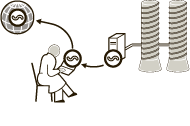
 Der Computerwurm Stuxnet soll nur ein Baustein eines großangelegten Cyber-Angriffs mit dem Namen „Olympische Spiele“ sein. Das berichtet der Journalist David E. Sanger in seinem neuen Buch, von dem heute ein Auszug in der New York Times veröffentlicht wurde. Begonnen wurde das Programm 2006 unter George Bush, Barack Obama hat es weiter geführt und ausgeweitet.
Am besten liest man die ganze Reportage bei der NY Times. Ein Auszug:
At a tense meeting in the White House Situation Room within days of the worm’s “escape,” Mr. Obama, Vice President Joseph R. Biden Jr. and the director of the Central Intelligence Agency at the time, Leon E. Panetta, considered whether America’s most ambitious attempt to slow the progress of Iran’s nuclear efforts had been fatally compromised.
“Should we shut this thing down?” Mr. Obama asked, according to members of the president’s national security team who were in the room.
Told it was unclear how much the Iranians knew about the code, and offered evidence that it was still causing havoc, Mr. Obama decided that the cyberattacks should proceed. In the following weeks, the Natanz plant was hit by a newer version of the computer worm, and then another after that. The last of that series of attacks, a few weeks after Stuxnet was detected around the world, temporarily took out nearly 1,000 of the 5,000 centrifuges Iran had spinning at the time to purify uranium.
Die These, dass die USA und Israel dahinter stecken, ist naheliegend und weit verbreitet. Sanger stützt sich jetzt auf Interviews mit Beamten aus den USA, Israel und Europa, die direkt beteiligt gewesen sein sollen.
Das große Problem mit staatlichen digitalen Waffen soll Obama auch klar sein: Wie will man anderen Staaten und Akteuren etwas verbieten, was man selbst macht?
Mr. Obama, according to participants in the many Situation Room meetings on Olympic Games, was acutely aware that with every attack he was pushing the United States into new territory, much as his predecessors had with the first use of atomic weapons in the 1940s, of intercontinental missiles in the 1950s and of drones in the past decade. He repeatedly expressed concerns that any American acknowledgment that it was using cyberweapons — even under the most careful and limited circumstances — could enable other countries, terrorists or hackers to justify their own attacks.
Wenig überraschend ist auch die Erkenntnis, dass Angriffe dieser Art keineswegs auf den Iran beschränkt sind. Die nächsten Ziele werden schon genannt:
American cyberattacks are not limited to Iran, but the focus of attention, as one administration official put it, “has been overwhelmingly on one country.” There is no reason to believe that will remain the case for long. Some officials question why the same techniques have not been used more aggressively against North Korea. Others see chances to disrupt Chinese military plans, forces in Syria on the way to suppress the uprising there, and Qaeda operations around the world.
Dazu gibt’s noch eine schöne Info-Grafik, wie der Angriff erfolgt sein soll.