
A German version of the article can be found here: „Internet-Shutdowns in Afrika: Eine Krise für Menschenrechte und Demokratie“
As Tanzanians went to the polls in October 2025, the country entered an information blackout. Connectivity began slowing on the eve of the election. By the morning of October 29, all regions reported a full data disruption.
Opposition parties were among the first to raise the alarm. ‘It became impossible to coordinate polling agents or even report irregularities,’ says Asha*, a youth organizer with an opposition party. She explains that with WhatsApp and SMS restricted, their party’s observers could not share photos, results, or evidence of intimidation in real time.
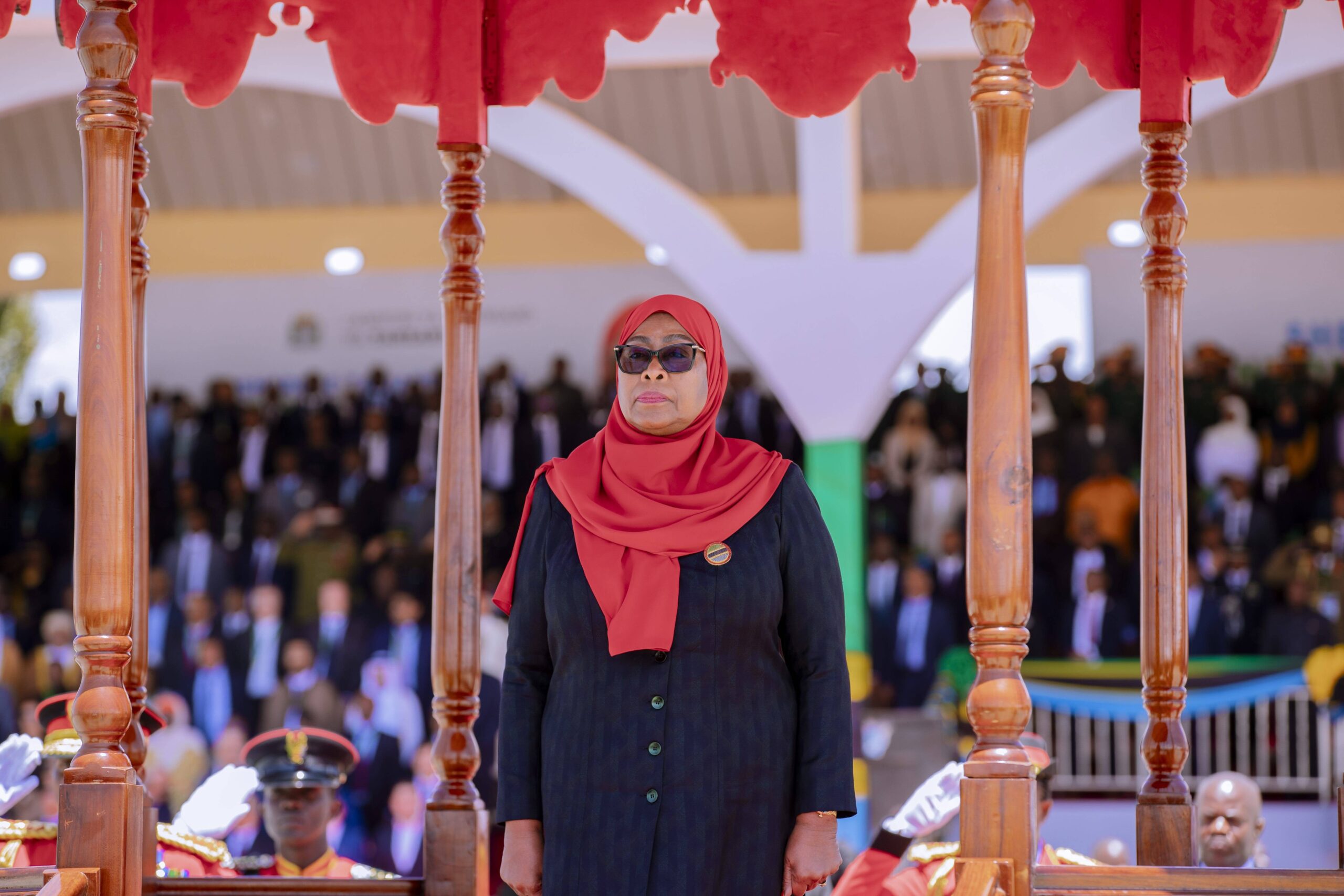
In the East African country, a total of 37 million people were called upon to vote for a new parliament and president. In the run-up to the elections, Samia Suluhu Hassan, the incumbent president and first woman to hold the office, had tightened her grip on the public sphere. Critical journalists and opposition politicians had been kidnapped. The two most promising opposition parties were excluded from the election.
The communications shutdown seemed to confirm fears about the integrity of the most important democratic processes. An election observer described witnessing the ticking of ballot papers and the adding of numbers during the shutdown. ‘The blackout was the final confirmation that this election would not be transparent, and I was among many who were kicked out by the police during counting,’ says Faustine*, an observer during the election.
Days later, protesters in Mwanza and Arusha attempted to demonstrate, but the lack of communication tools made mass mobilization nearly impossible. Any demonstrations that did emerge despite the blackout were brutally suppressed. Tanzania’s sudden disconnection, occurring during the most sensitive democratic moment, illustrates how shutdowns immobilize opposition networks while giving governments near-total narrative control.
High costs to economies and democracies
In 2016, the United Nations Human Rights Council adopted a resolution confirming the importance of internet access for human rights. Internet shutdowns, it says, undermine the expression, assembly, and informational rights of citizens.
Only days after the election in Tanzania, the African Commission on Human and Peoples’ Rights voiced concern about the digital blackout. The commission issued a press release, reminding everyone that ‘internet shutdowns undoubtedly constitute a violation of Article 9 of the African Charter on Human and Peoples’ Rights, which guarantees individuals the right to receive information, as well as the right to express and disseminate information.’
Tanzania’s blackout, however, is not an isolated case but part of a regional pattern: governments cutting connectivity during moments of political vulnerability. Across the continent, these disruptions occur at predictable moments: elections, anti-government protests, military coups, ethnic conflict, or when investigative journalism threatens state legitimacy. Governments often justify shutdowns using the language of security, stability, and ‚fake news’, but the purpose is to control information and suppress dissent.
Access Now’s #KeepItOn coalition reported that African states, including Tanzania, accounted for some of the highest global disruptions in recent years. Their latest report shows that 2024 saw the highest number of shutdowns ever recorded in a single year for the region, with 21 documented internet access shutdowns in 15 African countries. Just a few weeks ago, at the same time as the communications blackout in Iran, people in Uganda also had to endure another internet shutdown during elections.
In all cases, the people most affected – activists, journalists, humanitarian responders, opposition politicians, and young voters – are those at the heart of democratic participation. The outcomes extend beyond digital access challenges, including economic paralysis, humanitarian isolation, and the erosion of fundamental rights. The work of journalists becomes impossible, businesses that use online platforms or mobile money to operate lose significant revenue, and hospitals and humanitarian workers lose contact with the outside world during critical moments.
According to the organization NetBlocks Cost of Shutdown Tool (COST), internet shutdowns cost the Tanzanian economy more than US $238 million in 2025. In total, it is estimated that internet shutdowns cost sub-Saharan economies US $1.11 billion that year. But ultimately, the cost to democracy is even greater.
Ethiopia: More than 100 million people offline during civil war
In recent years, one of the worst offenders for intentional internet disruptions in Africa was Ethiopia, with over ten documented shutdowns since 2019. Between 2020 and 2022, Ethiopia’s regions of Tigray and Oromia were plunged into physical and digital isolation. Government-imposed shutdowns during the civil war not only silenced dissent but cut off humanitarian efforts.
The UN reported that over 100 million people were affected during a three-week internet shutdown in July 2020. As reports by the #KeepItOn coalition highlight, each blackout coincided with escalations in violence, a pattern that suggests the intent was not ‘security,’ but strategic invisibility.
The Committee to Protect Journalists (CPJ) was among the organizations to condemn the detention of journalists and the internet blackout. In a country where digital banking, education, and emergency response increasingly rely on connectivity, these shutdowns paralyzed people’s lives.
Sudan: Shutdowns in support of a military coup
Another example is Sudan, where internet shutdowns have marked a history of military rule. From 2019 to 2023, the government repeatedly cut access to the internet to limit the mobilization of protests and responses to coups. For instance, the army detained civilian leadership in October 2021 and cut internet access across the country.
The Sudanese people were left without any way to communicate with people inside or outside the country for almost a month. Protest organizers relied on offline networks and direct contact to pass information across neighborhoods to organize protests. Videos of military violence and mass arrests were delayed for weeks, allowing the army to act with impunity.
Human Rights Watch and other rights organizations labelled these disruptions as intentional hindrances to justice. The cutoff did more than thwart information; it stifled the civic space altogether. According to Human Rights Watch, the presence of military forces at hospitals has undermined or prevented access to medical care for those in need, and „medical professionals said the lack of internet access has only made it more difficult for them to organize ways to provide care.“ The work of emergency responders was also affected by the inability to receive money transfers via mobile banking applications.
A tool for authoritarian forces
While Ethiopia and Sudan differ politically and culturally, their shutdown patterns are similar. Both governments used connectivity restrictions not only as temporary security tools but also as long-term strategies to manage information and public situations.
Beyond the immediate disruption of communication, shutdowns also affect the options of opposition parties and civil society groups. In many African countries, opposition relies mostly on messaging apps, low-cost livestreaming, and citizen-led election monitoring networks.
When these channels go dark, opposition parties cannot coordinate polling agents, collect evidence, or deploy rapid response teams. Civil society watchdogs cannot verify electoral tallies, giving ruling parties space to manipulate results. Furthermore, especially women and youth activists, who organize primarily online, lose their mobilizing power. Grassroots organizers face physical danger, as they must revert to door-to-door communication.
In Tanzania, polling agents and observers reported that the blackout and police harassment created deep psychological fatigue. ‘We felt powerless throughout the process,’ says election observer Faustine*. ‘It wasn’t just technical, it silenced many things that happened in polling stations that are undemocratic.’
How civil society pushes back
Civil society organizations in Africa and elsewhere have made it clear that internet shutdowns are a growing human rights issue and are organizing resistance. For example, the Nigerian Paradigm Initiative as well as Uganda-based CIPESA challenge service suspensions in court. They educate citizens about civil disobedience, digital rights, and how to utilize technology.
Dozens of NGOs have signed onto the African Declaration of Internet Rights and Freedoms, which calls for unrestricted internet access across the region. Unfortunately, this declaration has been ignored by governments. Along with controls, the absence of transparency is a problem. Reports and data are often compiled by global initiatives, such as Access Now’s #KeepItOn coalition.
Civil society’s influence, while often indirect, has increasingly translated into legal and political consequences for governments that impose shutdowns. According to Felicia Anthonio, #KeepItOn Global Campaign Manager at Access Now, sustained advocacy has pushed internet shutdowns onto the global human rights agenda, with regional and international bodies now recognizing them as violations of fundamental rights.
Courts such as the ECOWAS Court have ruled against shutdowns in countries including Togo, Nigeria, Senegal and Guinea, sending what Anthonio describes as a clear message that shutdowns are illegal and those responsible can be held accountable.
Beyond litigation, civil society pressure has also led to public commitments by authorities to keep the internet on during elections in countries like Ghana, Kenya and the Democratic Republic of the Congo, as well as reversals or early terminations of shutdowns in places such as Zambia, South Sudan and Mauritius. While governments still hold the power to disconnect, civil society continues to shape legal norms, public opinion and accountability mechanisms aimed at ending shutdowns altogether.
What the Global North can do
Shutdowns are a ‘local issue’ in the context of authoritarian states; however, the regional and continent-wide normalization of shutdowns can lead to an export of authoritarian behaviors. Each shutdown legitimizes and emboldens further authoritarianism in neighboring countries, so that they are increasingly seen in networks of purportedly democratic states.
Stopping shutdowns requires pressure beyond the continent. Western governments and tech companies often condemn disruptions, but their responses often remain symbolic. There are ways, however, in which countries in the Global North could have a more profound positive influence.
First and foremost, they could stop exporting surveillance and censorship tools that allow shutdowns to be implemented. Furthermore, they could tie development funding to digital rights protections, ensuring governments that receive aid cannot also sabotage communication networks without consequences. Support for local civil society groups is also important, for example through funding digital security training or legal assistance for court challenges.
As Sophia Nabalayo, a Kenyan PR & Communications Specialist, tells netzpolitik.org: ‘African activists can fight shutdowns on the ground, but global actors often control the infrastructure and financing that make shutdowns possible. We need solidarity, not just statements.’
* Names have been changed for safety reasons and are known to the editorial team.
About the author: Derrick Wachaya is a climate communicator and freelance journalist based in Nairobi.
Schreibe eine Ergänzung!