Schlagwort: english
-
: Kenya: Data from 11.5 million customers of a provider end up on black market
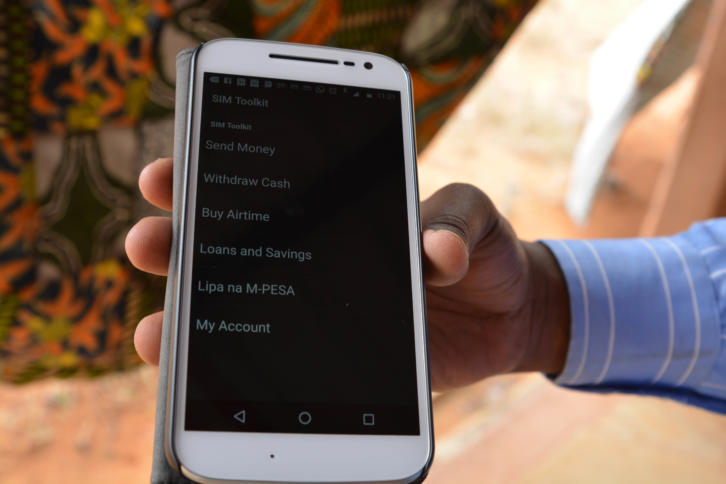
This is how the M-Pesa app looks. : Kenya: Data from 11.5 million customers of a provider end up on black market M‑Pesa is a Kenyan system for cashless payment. This business model of the Kenyan communications provider Safaricom is built on the transfer of data. Now, employees of the provider have also leaked the personal information of 11.5 million users. The case ends up in court.
-
WikiLeaks: The US is indeed investigating Assange for publishing secret information, DOJ letter suggests
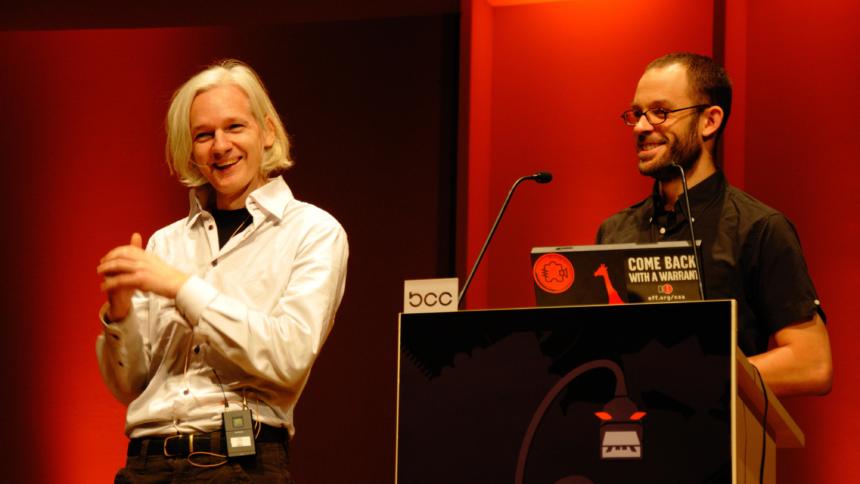
Death penalty for journalism? Assange and Domscheit-Berg in 2009. WikiLeaks: The US is indeed investigating Assange for publishing secret information, DOJ letter suggests The United States is officially charging Julian Assange for hacking, a crime seemingly perfect for extradition. However, the US Attorney’s Office is also investigating him for „obtaining and disseminating secret information“, punishable by death. That is what the Department of Justice wrote in a letter we now publish.
-
: Facebook Custom Audience illegal without explicit user consent, Bavarian Data Protection Authority rules

Nowhere to hide: To target you on Facebook and Instagram, advertisers routinely share your data with Facebook. : Facebook Custom Audience illegal without explicit user consent, Bavarian Data Protection Authority rules Online shops and marketers routinely share customer data with Facebook to reach them with targeted advertising. Turns out: in many cases this is illegal. A ground-breaking decision by a German Data Protection Authority recently ruled that matching customers’ email addresses with their Facebook accounts requires their explicit consent.
-
: EU says „no contingency plans“ for data flows in case of no-deal Brexit

Martin Selmayr, Jean-Claude Juncker : EU says „no contingency plans“ for data flows in case of no-deal Brexit Commission officials led by Martin Selmayr talked Brexit with German lobbyists. Behind closed doors, the Commission says they will not take emergency measures to protect UK businesses from data protection trouble following a no-deal exit. Rights campaigners see a no-deal Brexit as an opening to fight surveillance.
-
: Facebook and Airbus hold secretive drone tests in the Australian bush

: Facebook and Airbus hold secretive drone tests in the Australian bush The social network company killed its own Aquila drone programme last year. But Facebook has not quit plans to spread internet across the globe. We publish a document that shows Facebook is working with European defence giant Airbus on drone-based connectivity.
-
: Self-driving cars won’t save us from the climate abyss

Cars until the bitter end? : Self-driving cars won’t save us from the climate abyss Europe has to drastically lower emissions within a dozen years to stall catastrophic levels of warming. Tech companies and the auto industry promise innovation to cut traffic and energy consumption. But even autonomous and electric vehicles won’t save us from drowning.
-
: From Beethoven to Despacito: Five Songs explain EU copyright reform

Pink Floyd inspires many, even EU legislators : From Beethoven to Despacito: Five Songs explain EU copyright reform Metallica fired the first shot in the epic battle over copyright enforcement on the internet. 20 years later, Brussels fights over Another Brick in the Wall. EU copyright reform could change everything, even Despacito. We made you a mixtape on the controversial law.
-
: Surveillance exports: How EU Member States are compromising new human rights standards

Dual Use Leaks. : Surveillance exports: How EU Member States are compromising new human rights standards Since 2016, the European Union has been working on proposals to implement stricter controls on the export of surveillance technology outside the EU. However, internal documents now prove that certain Member States – especially Sweden, Finland, and the United Kingdom – are succumbing to pressure from business interests. As a result, human rights safeguards are being diluted.
-
: Facebook and Airbus jointly lobby EU Commission on drones, email shows

The Airbus Zepyhr drone can stay airborne for 25 days : Facebook and Airbus jointly lobby EU Commission on drones, email shows The social media giant has evidently not buried its plans for high altitude connectivity. Facebook and Airbus discussed Zepyhr drones at a meeting with a senior official in Brussels.
-
: NPP149: Civilian Drones – Who should be allowed to fly where?

Police shoots at a drone during protetst against the Dakota Access pipeline. : NPP149: Civilian Drones – Who should be allowed to fly where? We talked to anthropologist and documentary filmmaker Adam Fish about the new possibilities small civilian drones offer for documentary, environmental and activist projects. The drones give us an unique view of the world but at the same time they can lead to an unprecedented form of surveillance.
-
: In Censoring Wikipedia in Turkey, We Are Censoring Our Collective Knowledge

Istanbul : In Censoring Wikipedia in Turkey, We Are Censoring Our Collective Knowledge 2018 will be a pivotal year for the internet. For the first time in human history, over half of the world’s population will be online. But new threats threaten the sustainability of the world’s largest information source.
-
: „Who owns the infrastructure becomes important“: Digital payments, scoring and blockchains in the Global South

: „Who owns the infrastructure becomes important“: Digital payments, scoring and blockchains in the Global South In our interview, media scholar and political economist Rachel O‘Dwyer explains how companies and governments promise to connect those without a bank account to the global economy. She warns about the convergence of social media and payment infrastructures, where ever more data points are connected and used to decide on the life of individuals. Cash still has a role to play, she argues.
-
: This week @netzpolitik.org, #47: Surveillance and Savants

: This week @netzpolitik.org, #47: Surveillance and Savants Welcome to our highlights of net political news from Germany, week 47.
Who wins the contracts?
The computer scientist Martin Tschirsich has examined ten products from various manufacturers of communal information systems. The software is used for the administration, manages citizens data and other information the city or municipality processes. -
: This week @netzpolitik.org, #46: consumer friendly network blocks

: This week @netzpolitik.org, #46: consumer friendly network blocks Welcome to our highlights of net political news from Germany, week 46.
EU to strengthen consumer protections while introducing contested blocking measures.
The European parliament has passed a bill to protect European consumers with last-minute additions of contested net block censorship measures. Meanwhile, privacy activist Maximilian Schrems’ class action suit against Facebook, to shore up consumer rights, is declared ineligible by the European Attorney General. -
: Voices Critical of Turkey mysteriously losing thousands of followers on Facebook

Kerem Schamberger loses friends on Facebook, although they did not have unfriended him themselves. : Voices Critical of Turkey mysteriously losing thousands of followers on Facebook On facebook, people and pages are suddenly losing thousands of friends and followers. Particularly affected were accounts criticizing Turkey. Facebook rejects accusations of censorship and claims to be taking measures against fake accounts among followers. However the accounts in question are genuine.
-
Secret documents: German foreign spy agency BND attacks the anonymity network Tor and advises not to use it

Secret documents: German foreign spy agency BND attacks the anonymity network Tor and advises not to use it The German spy agency BND developed a system to monitor the Tor network and warned federal agencies that its anonymity is „ineffective“. This is what emerges from a series of secret documents that we are publishing. The spies handed a prototype of this technology over to the NSA, in expectation of a favor in return.
-
: Call for Papers: Fight for Your Digital Rights! – “Das ist Netzpolitik!”-Conference 2017

Auf der GIZ-Konferenz soll erörtert werden, wie es um die digitalen Grundrechte im globalen Maßstab steht. : Call for Papers: Fight for Your Digital Rights! – “Das ist Netzpolitik!”-Conference 2017 On the 1st of September, netzpolitik.org is going to celebrate its 13th birthday with its „Das ist Netzpolitik!“-conference and party in Berlin. There will be a comprehensive program tackling major upcoming issues and challenges for digital rights in Germany and Europe. We warmly invite you to participate and hand in your ideas.
-
: New Hate Speech Law in Germany: Already Extended Before it Enters Into Force

: New Hate Speech Law in Germany: Already Extended Before it Enters Into Force The „Netzwerkdurchsetzungsgesetz“ is no longer only directed against Hate Speech and Fake News, but also against pornographic content and many other offenses. In addition, the new draft now contains a clause permitting private persons the possibility of obtaining the identity of other private individuals, which could lead to the end of anonymity on the internet.
-
Three years NSA inquiry committee: A serious investigation remains an illusion, while the mass surveillance continues.

The german government in the spying scandal. (symbol) Image: <a href="https://commons.wikimedia.org/wiki/File:See_No_Evil,_Hear_No_Evil,_Speak_No_Evil.jpg">John Snape</a>. License: Creative Commons <a href="https://creativecommons.org/licenses/by-sa/3.0/deed.en">BY-SA 3.0</a>. Three years NSA inquiry committee: A serious investigation remains an illusion, while the mass surveillance continues. The German Parliamentary inquiry committee set out to investigate the Snowden revelations. It failed to do that. Instead, it revealed that the German spy agency BND is also breaking the law. Yet the result is not an end of ubiquitous mass surveillance, but a massive upgrade. A comment.
-
: TiSA-Leaks: Fundamental rights shall be levered out for free trade – also in the internet
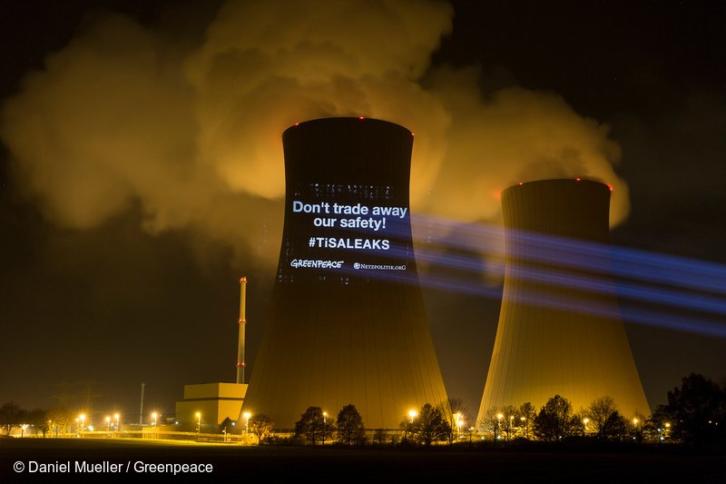
: TiSA-Leaks: Fundamental rights shall be levered out for free trade – also in the internet The free trade agreement TiSA is a danger for the internet. New leaks we publish in cooperation with Greenpeace show clearly that privacy, net neutrality and IT security are under threat. Moreover, the US want to privatize censorship. An overview of the most important issues.