Schlagwort: english
-
"Wolf culture": How Huawei controls its employees in Europe

Huawei has 2,400 employees in Düsseldorf. Inside there is a quasi-military esprit de corps, according to ex-employees. "Wolf culture": How Huawei controls its employees in Europe Former employees accuse Huawei of discrimination. How massively the company interferes in their private lives and how it keeps its staff in line is revealed by internal documents and covert audio recordings that netzpolitik.org and the media partners of The Signals Network have analysed.
-
Online advertising: „We just need the market to not be rigged“

Online advertising: „We just need the market to not be rigged“ Competition scholar Dina Srinivasan looks at how Google dominates online ad exchanges. In an interview with netzpolitik.org, she explains why the tech giant has conflicts of interest that need to be managed.
-
Russian disinformation: The network of fake foreign media
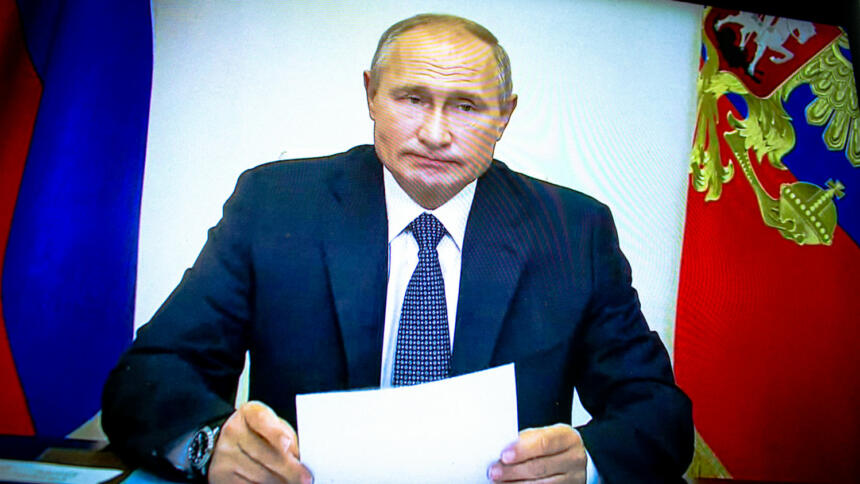
In Russia, the news from the disinformation network serves the Kremlin's political goals. Russian disinformation: The network of fake foreign media For years, alleged news portals from Europe have been disseminating Russian propaganda. netzpolitik.org and WELT have now uncovered a network that is supposed to make lies in Russian media more credible. There are connections to the secret service.
-
Freedom of the Press: Google funds mouthpiece of Rwandan regime

The New Times in Rwanda is described as "mouthpiece" of President Kagame Freedom of the Press: Google funds mouthpiece of Rwandan regime The Google News Initiative writes cheques to media around the globe, including pro-regime newspapers in countries under autocratic rule – a move that baffles human rights advocates.
-
News from Elsevier: No open access deal, but spyware against shadow libraries?

The crow is the emblem of the scientific shadow library Sci-Hub News from Elsevier: No open access deal, but spyware against shadow libraries? Almost 200 universities and research institutes in Germany currently do not have access to journals published by the largest scientific publisher, Elsevier. Instead of negotiating a switch to Open Access, however, Elsevier prefers to fight shadow libraries that make the contractless situation more bearable for researchers.
-
ByteDance: TikTok failed to bar users it suspected to be under 13

12 year old Lianna Riedel Frank had more than 10.000 followers on TikTok. Her account was only banned after the Danish Broadcasting Corporation reported on her. ByteDance: TikTok failed to bar users it suspected to be under 13 TikTok says it is for users 13 years and older. But insiders report, the video-sharing-app instructed content moderators not to block children on the platform. Conspicuous videos were escalated to a team in Beijing instead.
-
PimEyes: A Polish company is abolishing our anonymity

Whoever shows their face in public can be recognised. (Symbolic image) PimEyes: A Polish company is abolishing our anonymity An investigation by netzpolitik.org shows the potential for abuse of PimEyes, a free search engine for 900 million faces. Whoever’s photos have been published on the Internet could already be part of their database.
-
European Parliament: MEPs blast ‚Apple-only’ voting app
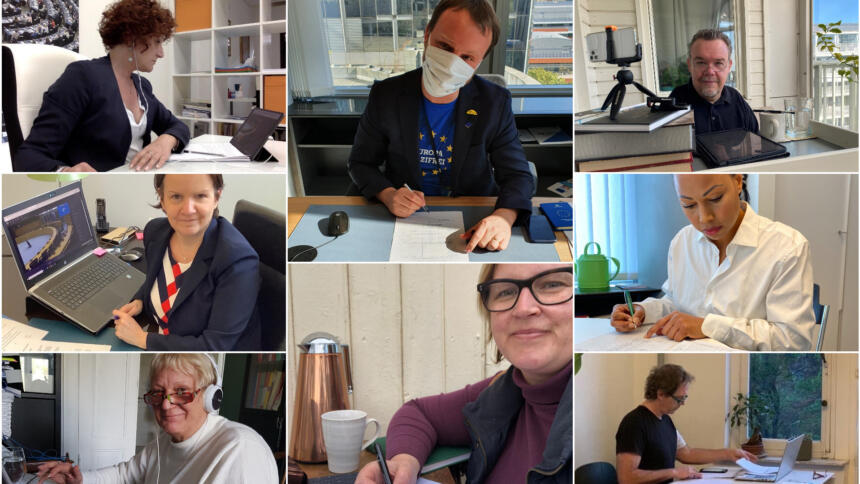
Scan-and-paper voting has become the norm for MEPs during the pandemic European Parliament: MEPs blast ‚Apple-only’ voting app The European Parliament has developed an app called iVote for remote voting during the pandemic. But left-wing MEPs are angry that it only works on Apple devices.
-
Stalking via Smartphone: How security researchers are working to expose stalkerware on your phone

Das Smartphone ist immer dabei - und damit auch die Überwachung. Szene aus einem Video der Coalition Against Stalkerware. Stalking via Smartphone: How security researchers are working to expose stalkerware on your phone Stalkerware is software designed to run on your smartphone, keep tabs on everything you do and report it back to whoever decided to spy on the intimate details of your life. This is a crime in most countries, but the apps are hard to find. Security researchers are working to change that.
-
Tools for encryption and anonymity: Germany and Europe need to step up to their responsibility

Tools for encryption and anonymity: Germany and Europe need to step up to their responsibility Much of the funding of projects for the technical implementation of digital freedoms is threatened by the Trump Government. It is now time for Germany and Europe to step into the breach and provide adequate and sustainable funding for the development ecosystem. A commentary.
-
L'App unique: France goes it alone on digital contact tracing

The French approach to contact tracing makes the country at odds with EU partners L'App unique: France goes it alone on digital contact tracing The European Commission wants to make Corona-tracing apps work across borders ahead of the summer holidays. But the French app has been excluded.
-
Guerilla marketing: German outdoor advertiser put up posters for online shop that sells drugs

This photo from Oberhausen was sent to netzpolitik.org by an allegedly worried passer-by. We pixelated the QR code on the poster. Guerilla marketing: German outdoor advertiser put up posters for online shop that sells drugs With a mixture of poster advertising and guerrilla marketing, criminals try to draw attention to a shop that sells drugs on the internet. The outdoor advertising company AWK and several media outlets are falling for this trick.
-
Zoomed out: Pandemic „exposed vulnerabilities“ in EU systems

The EU Commission under chief Ursula von der Leyen faced renewed cyber attacks in the pandemic Zoomed out: Pandemic „exposed vulnerabilities“ in EU systems EU officials and diplomats lack a unified and secure way of talking to each other. The rise of telework in the Corona crisis shows a need to upgrade communications systems, says an internal report.
-
Collective Action: K‑Pop Stans are boosting US-protests against racism

K-Pop meets Anonymous. Collective Action: K‑Pop Stans are boosting US-protests against racism At the protests in the USA, fans of K‑Pop appear as new political actors who mobilise against racism with collective actions on the Internet. What is happening and what does Korean pop have to do with Anonymous? A search for clues.
-
Data retention: Amidst pandemic, Norway moots powers for spy agency

The Norwegian military could soon get sweeping powers to intercept communications Data retention: Amidst pandemic, Norway moots powers for spy agency With public attention diverted by the corona crisis, Norway debates a law that would give its military intelligence agency sweeping powers to collect metadata from all cross-border communication.
-
Covid-19: Why is contact tracing useful?
Covid-19: Why is contact tracing useful? Covid-19 contact tracing and data protection can go together. Johannes Abeler, Matthias Bäcker and Ulf Buermeyer lay out the details of how such a technology might work.
-
Freedom of the press: A German company is responsible for the deletion of videos critical of the Albanian government

Aldor Nini, CEO of Acromax Media Freedom of the press: A German company is responsible for the deletion of videos critical of the Albanian government Acromax Media reports alleged copyright infringements to platforms such as Facebook and thus also makes journalistic content disappear from the Internet. The Hamburg-based company worked, amongst others for the Albanian governing party. Reporters Without Borders considers this an attempt to suppress independent journalism.
-
Interview on internet shutdowns: Jordan does not block, it throttles internet access

Internet access may be blocked. Interview on internet shutdowns: Jordan does not block, it throttles internet access Worldwide, governments are increasingly shutting down internet access to disrupt protests, block illegal content or to censor journalism. We spoke to Berhan Taye from Access Now about these excessive actions.
-
No more WhatsApp: EU diplomats to use mystery app for secure messaging
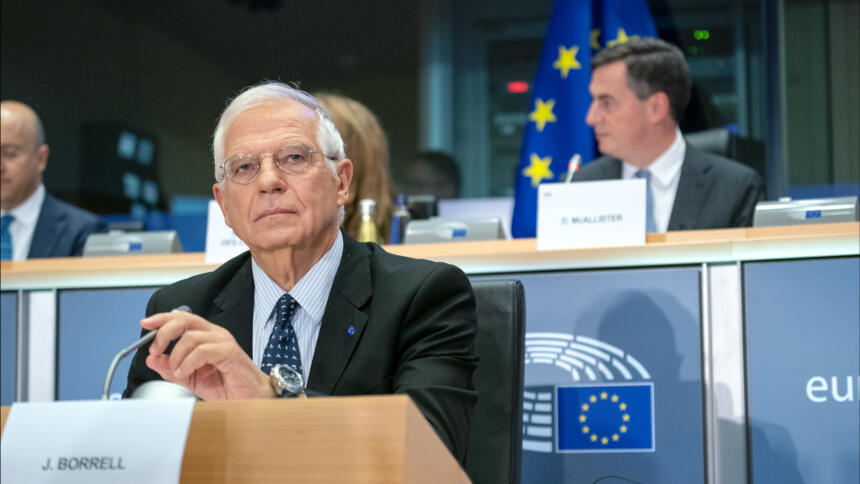
Josep Borrell, head of the European External Action Service No more WhatsApp: EU diplomats to use mystery app for secure messaging While the EU Commission has asked staff to use Signal for messaging, the External Action Service is rolling out a bespoke app. But it refuses to share any details about it.
-
Hacks and spying: Is WhatsApp safe for diplomats?
Hacks and spying: Is WhatsApp safe for diplomats? The Facebook-owned app has become a standard tool for international negotiations. Amid rising security concerns, EU experts now suggest a safer alternative. But the WhatsApp era is far from over.