Schlagwort: english
-
: „Suspicion of Treason“: Federal Attorney General Announces Investigation Against Us In Addition To Our Sources
: „Suspicion of Treason“: Federal Attorney General Announces Investigation Against Us In Addition To Our Sources If it were up to the Federal Attorney General and the President of the German Domestic Security Agency, two of our reporters would soon be in prison for at least two years. Today, we were officially informed about investigations against our Markus Beckedahl, Andre Meister and an „unknown“ party. The accusation: Treason.
-
: Commissioner Oettinger’s facepalm-worthy interview about data retention, copyright, net neutrality and Co.

Wenn ein facepalm nicht reicht. Oder zwei, oder drei... : Commissioner Oettinger’s facepalm-worthy interview about data retention, copyright, net neutrality and Co. Today’s interview with the EU Commissioner for Digital Economy and Society, Günther Oettinger, with Markus Keßler at futurezone.at was one of the most shocking ones so far in terms of unreflected statements and the total lack of a factual foundation. Therefore we want to make it accessible not only for German speaking persons.
-
Classified Department: We Unveil the New Unit of the German Domestic Secret Service to Extend Internet Surveillance
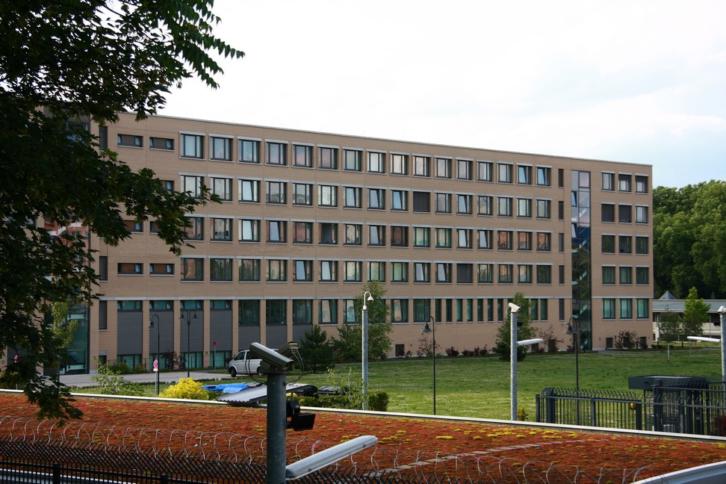
Das "Gemeinsame Terrorismusabwehrzentrum" in Berlin-Treptow dient als Blaupause für die Pläne Europols. Wo st 01 / Wikimedia Commons / CC-BY-SA-3.0-DE, Verfassungsschutz berlin, CC BY-SA 3.0 DE Classified Department: We Unveil the New Unit of the German Domestic Secret Service to Extend Internet Surveillance The domestic secret service is setting up a new department to extend its internet surveillance capabilities, investing several million Euros. We publish the secret description for the new unit named „Extended Specialist Support Internet“. Over 75 spies are designated to monitor online chats and Facebook, create movement patterns and social network graphs and covertly „collect hidden information“.
-
Parliamentary Committee: How the German Foreign Intelligence Agency BND tapped the Internet Exchange Point DE-CIX in Frankfurt, since 2009
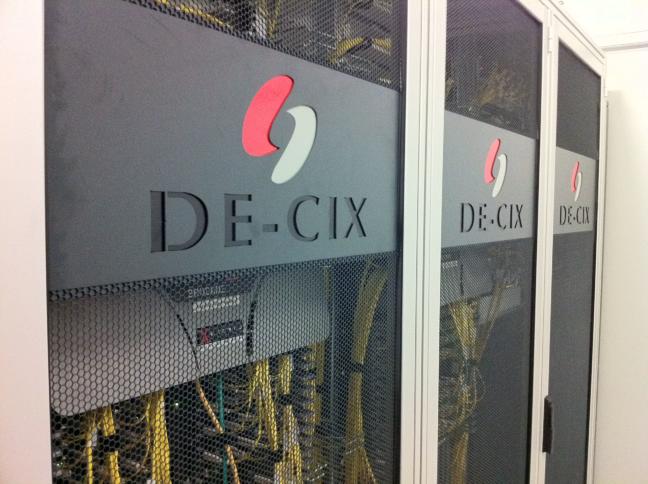
Rack at DE-CIX. Bild: <a href="https://secure.flickr.com/photos/bundy/">Stefan Funke</a>. Lizenz: Creative Commons <a href="https://creativecommons.org/licenses/by-sa/2.0/">BY-SA 2.0</a>. Parliamentary Committee: How the German Foreign Intelligence Agency BND tapped the Internet Exchange Point DE-CIX in Frankfurt, since 2009 The German Foreign Intelligence Agency Bundesnachrichtendienst taps internet traffic directly at the Internet Exchange Point DE-CIX in Frankfurt since 2009, replacing predecessor operation „Eikonal“ at Deutsche Telekom. This was stated by the operator of DE-CIX at the German Parliamentary Committee investigating Intelligence Agency mass surveillance operations.
-
Advanced German Technology: How a German-Arab Shell Corporation Tries to Sell New State Malware „Made in Germany“
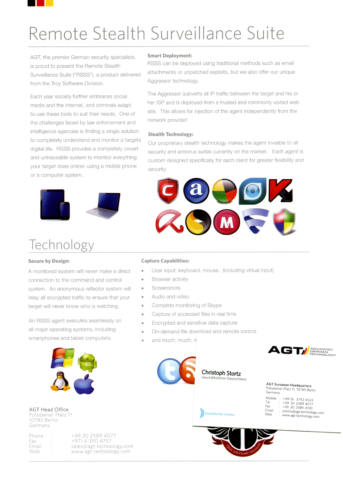
"Remote Stealth Surveillance Suite" leaflet. Advanced German Technology: How a German-Arab Shell Corporation Tries to Sell New State Malware „Made in Germany“ A German-Arab web of companies advertises a new government malware „made in Germany“ at international surveillance trade shows. In a lengthy investigation, we gathered information on companies and actors involved. It remains unclear whether the company has a finished product for sale, nevertheless they continue to promote the product – directly to law enforcement and intelligence agencies.
-
: TTIP and TiSA: big pressure to trade away privacy

: TTIP and TiSA: big pressure to trade away privacy The negotiations between the U.S. and the EU on the „Transatlantic Trade and Investment Partnership“ (TTIP) will address e‑commerce and transatlantic data flows. In this context, there are more and more indications that European data protection standards could be undermined by such a trade agreement.
-
Gamma FinFisher hacked: 40 GB of internal documents and source code of government malware published

Surveillance made in Germany - FinFisher-Spionage-Software Gamma FinFisher hacked: 40 GB of internal documents and source code of government malware published A hacker claims to have hacked a network of the surveillance technology company Gamma International and has published 40 gigabytes of internal data. A Twitter account has published release notes, price lists – and source code. Malware researchers and human rights activists welcome the publication, Gamma itself refuses to comment.
-
: Interview with BPjM-Leaker: Website Blacklists shouldn’t be done „in an intransparent way by a government“
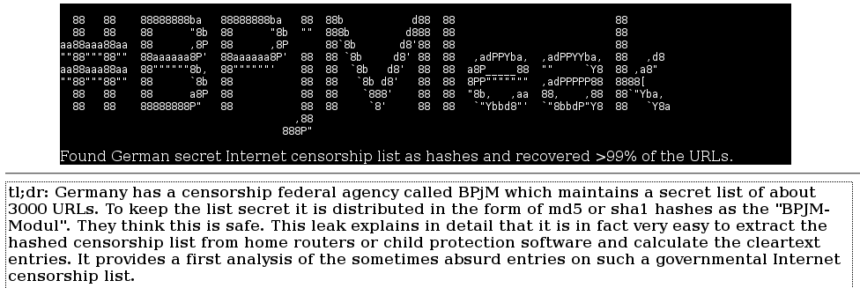
Screenshot of the website "BPJM-Leak" with a description of the hack and the extracted list of URLs. : Interview with BPjM-Leaker: Website Blacklists shouldn’t be done „in an intransparent way by a government“ An anonymous hacker has reverse-engineered and published the once-secret blacklist of URLs produced by a German federal agency. He or she did this mainly out of technical curiosity – and found that it was really easy to do. The hacker hopes not go get sued for this action – and offers a general critique on secret, state-sponsored internet censorship.
-
Interviews with E-Book-Pirates: „The book publishing industry is repeating the same mistakes of the music industry“
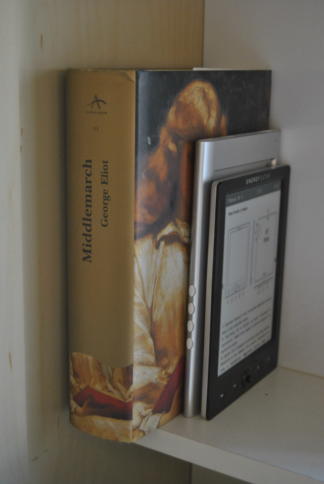
Buch und E-Book-Reader. Bild: <a href="http://ceslava.com/">Cristian Eslava</a>. Lizenz: Creative Commons <a href="https://creativecommons.org/licenses/by-sa/2.0/deed.en">BY-SA 2.0</a>. Interviews with E-Book-Pirates: „The book publishing industry is repeating the same mistakes of the music industry“ What MP3, Napster and portable audio players were for the music industry, EPUB and e‑book readers are for the book publishing world. Netzpolitik.org interviewed three operators of semi-legal websites for DRM-free e‑books.