

Wer sich bisher fragte, was man inhaltlich am G8-Treffen kritisieren könnte, wird in der Abschlusserklärung fündig.
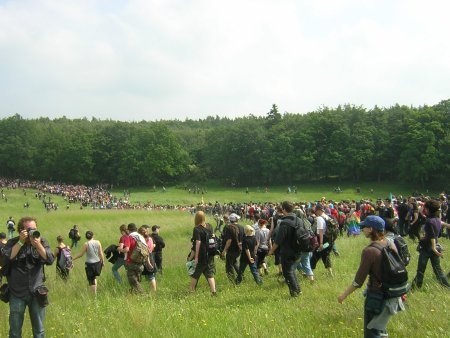
[Quelle: Indymedia]
Interessant wird im Zusammenhang mit Netzpolitik wird es ab Seite 11: „Intellectual Property Protection as the Backbone of Innovation“:
34. A fully functioning intellectual property system is an essential factor for the sustainable development of the global economy through promoting innovation. […]
Im Jahre 2007 einseitig nur mehr Schutz des sogenannten „Geistigen Eigentums“ zu fordern, ist weder weitblickend noch erkennt es die Realität in der Wissensindustrie und Forschung in Zeiten von Open Innovation, Open Access und Offenen Produktionsprozessen. Von letzteren Punkten findet sich absolut nichts. Null. Diese Politik ist einseitig und meiner Meinung nach schädlich für unsere Ökonomie. Abgesehen davon ist sie schädlich für eine globale nachhaltige Entwicklung in vielen anderen Bereichen wie der AIDS-Bekämpfung.
Gleichzeitig ist man über alles erfreut, was die Content-Industrie durchsetzen möchte. Die folgenden Punkte sind die Wunschlinie der Contentindustrie-Lobby. Mehr Schutz der eigenen Produktionswege bedeutet mehr Kopierschutz und DRM. Inklusive der Verfogung von Tauschbörsennutzern. Von Verbraucherrechten findet man nichts. Null. Komplette Linie der Industrie-Lobby:
37. We welcome the joint Declaration of the business communities of all G8 countries on “Strategies of G8 Industry and Business to Promote Intellectual Property Protection and to Prevent Counterfeiting and Piracy” which highlights actions companies are taking to secure their intellectual property rights at home and abroad and to keep their global supply chains free of pirated and counterfeit goods – from producers and distributors, retailers and merchandisers. Industry and business have an essential role to play in protecting innovation, an d we will engage our respective private sectors on effective solutions with regard to both the supply and the demand side of piracy and counterfeiting. We also welcome educational campaigns with the help of business communities in our countries directed at raising awareness of consumers with regards to the negative effects of counterfeiting and piracy.
Der letzte fett markierte Satz ist quasi eine Liebeserklärung für die „Raubkopierer sind Verbrecher“-Kampagne. Die G8-Staaten wünschen sich von der Content-Lobby explizit weitere Kampagnen dieser Art. Die einseitigen Broschüren der Musikindustrie, die an Schulen verteilt werden, dürften wohl auch dabei gemeint sein.
Die Bundesregierung feiert dabei den „Riesendurchbruch“, dass man mal eine Halbierung des Ausstoßes von Treibhausgasen bis zum Jahr 2050 ggf. in Betracht ziehen zu können. Bis dahin sind alle Beteilgten wahrscheinlich tot und können nicht zur Verantwortung gezogen werden für ihre Beschlüsse. Halleluja.
Eine zivilgesellschaftliche Erklärung zu geistigem Eigentum und dem G8-Gipfel 2007, die ich unterstütze, findet sich hier: Für bessere Entwicklung und gerechteren Zugang zu Wissen in all seinen Formen.
Eine weitere und viel ausführlichere Analyse gibt es mittlerweile bei IP-Watch: G8 Summit Strengthens IP Protection; May Undercut Compulsory Licensing.
Darin auch eine Reaktion von Ärzte ohne Grenzen:
Non-governmental organisations gathered in nearby Rostock and Kuehlungsborn are highly critical of the approach that is being taken, they told Intellectual Property Watch. They were concerned about the unilateral push for ever more “strengthening” of IP, said a spokesperson from the organisation Médecins Sans Frontières (MSF) in a first reaction to the final declaration. Intellectual property protection has not provided the innovation needed to address diseases in the developing world, MSF warned at the summit.
G8 leaders are holding up intellectual property protection as the only way to foster innovation, according to MSF. Tido von Schoen-Angerer, director of MSF’s Campaign for Access to Essential Medicines, told Intellectual Property Watch: “We know from our work in developing countries that more patent protection did not lead to more innovation.” Universal access to affordable drugs for diseases like tuberculosis and HIV/AIDS, leishmaniasis and sleeping sickness is still far from realised. For the G8 to be putting IP protection forward as solution for the future is “simply disingenuous.”
Schoen-Angerer instead pointed to the intergovernmental working group at the World Health Organization that is exploring alternatives to patent protection. It was unfortunate that these discussions did not find any reflection in G8 discussions, he said.
“It is also irritating that when you try to talk about alternatives you always end up in discussions about counterfeit medicines,” Schoen-Angerer said, though he acknowledged they are a danger to people’s health. “Counterfeit medicine is a crime,” he said. “But they are not hampering innovation.”