
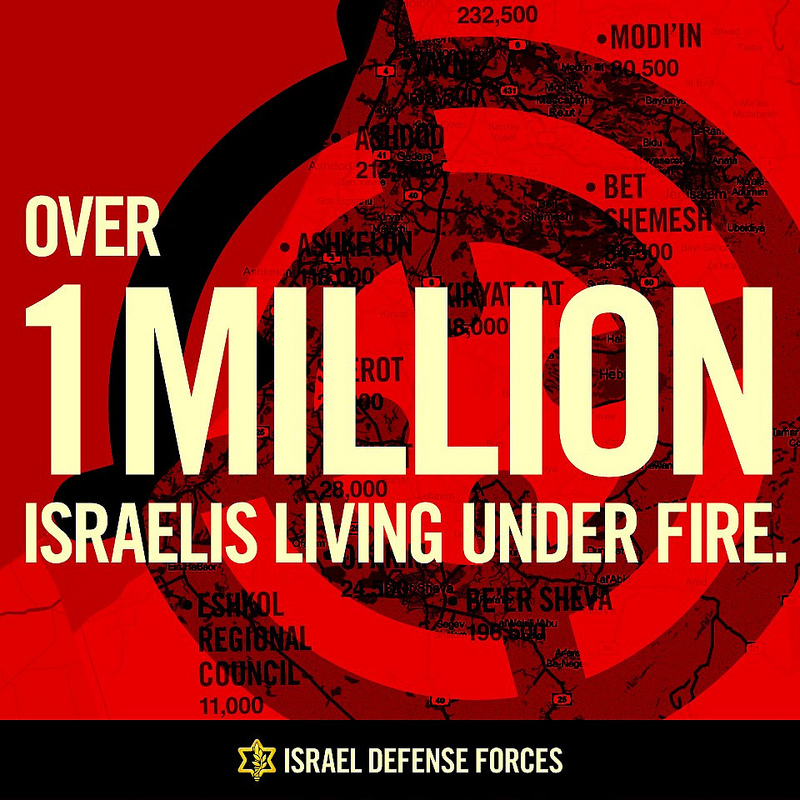
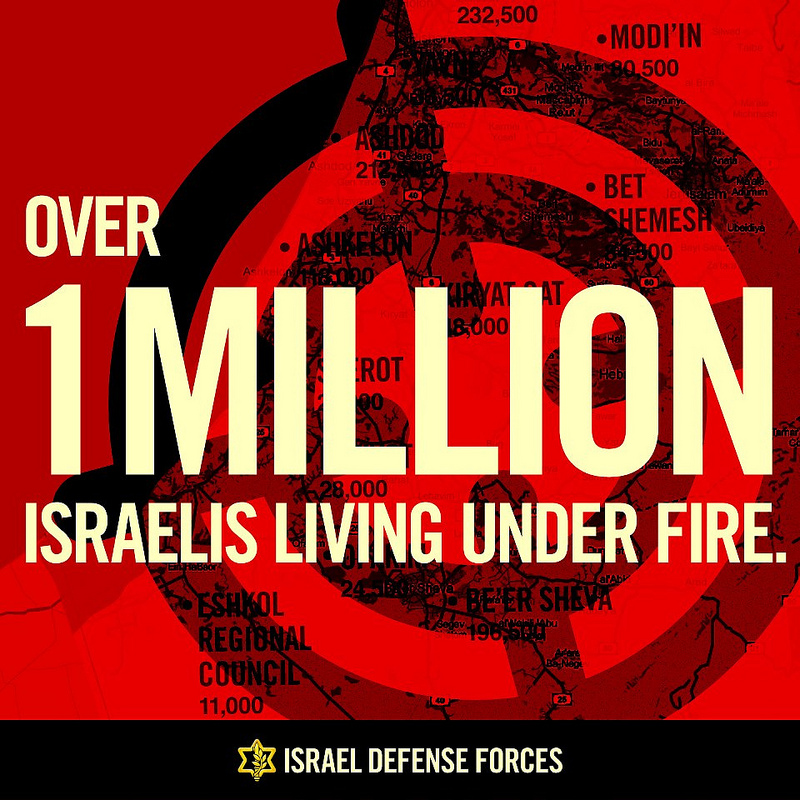
 „Sehr seltsam und beunruhigend“ nennt es Joseph Flatley bei The Verge: Die Berichte über den Krieg zwischen Hamas und Israel vermischen sich zu einem Brei aus Gewalt, Todesopfern, Vorwürfen – und Tweets, Blogposts, Bildern und Videos. Das Bild links findet sich zum Beispiel auf dem offiziellen Flickr Account der Israelischen Streitkräfte IDF, ebenso wie 93 weitere, die seit Ausbruch des Konflikts gepostet wurden. Dazu 20 Blogposts, etliche Einträge bei Twitter, ein YouTube Channel, Instagramm und fast 400 Tweets in den letzten zwei Wochen:

„Share this if you support the IDF“ steht da bei Facebook auf einem Bild mit lächelnden Soldaten, es finden sich Grafiken mit den Zahlen der abgefeuerten Raketen, dazwischen Bilder von verängstigten Kindern. 286000 Menschen gefällt das.
Joseph Flatley versucht, sein seltsames, beunruhigendes Gefühl dabei auszudrücken:
But by reducing Pillar of Defense to #PillarOfDefense, Twitter is taking a large, complicated event and breaking it down into small, constituent parts that have little impact in and of themselves. Just as easily as a grassroots activist group anywhere in the world might use Twitter to communicate the news, @IDFspokesperson is using Twitter to neutralize the news.
By making sure the conversation takes place in this restricted forum, @IDFspokesperson is limiting the possible responses. When I say that the IDF has turned a military operation into a #hashtag, I’m not being cute. I’m saying that it’s transformed an act of war into a social media event. And once #PillarOfDefense has become equal in our mind to #VMA2010 or #YOLO, it will be tough to evoke a stronger response than this: “ *grabs popcorn* “
Auch die Hamas twittert unter @AlqassamBrigade, und nicht weniger als die IDF. Da werden Vergeltungsmaßnahmen dokumentiert, Bilder von zerstörten Gebäuden gepostet und getötete Soldaten und Zivilisten benannt. Es sind jedoch vor allem Aktivisten, die auf Seiten der Palästinenser online Informationen verbreiten:
While Hamas’ social media efforts have been clumsy, independent activists have driven the narrative on the Palestinian side, as young Gaza residents rush to hospitals to take and upload photos and video of the carnage. They’ve been able to effectively disseminate disturbing pictures of violence, such as shots of small children wounded by shrapnel, allegedly from Israel’s air strikes.
Worum handelt es sich also bei den bloggenden, twitternden Kriegsparteien? Eine Popularisierung von Regierungskommunikation? Auf dem IDF-Blog finden sich mittlerweile sogar Gamification-Elemente. Diese waren im Juli bereits online gestellt worden: „IDF Ranks – Become The Ultimate Virtual Soldier!“, sind aber jetzt erst wieder auf der Startseite zu finden. Punkte gibt es zum Beispiel für das Verbreiten der Bloginhalte in Sozialen Netzwerken. John Mitchell von ReadWrite hat bei einem Sprecher nachgefragt:
An IDF spokesperson tells ReadWrite that „over the past two days the blog has experienced technical difficulties due to high traffic, and ‚IDF Ranks’ was temporarily taken down to make necessary adjustments to our systems. In no way is ‚IDF Ranks’ meant to gamify Operation Pillar of Defense or any military actions during the operation.“
Die Beschreibung des „IDF Ranks“ lautet: „IDF Ranks promotes YOU for your activities around IDF-related material. Your every action — commenting, liking, sharing and even just visiting — rewards your efforts, as well as helps spread the truth about the Israeli army all over the world.“ und dann „Play now“. Dieses „Spiel“ war vielleicht nicht dazu gedacht, Kriegs-PR zu gamifizieren – doch ist es genau das, was gerade geschieht.
Diese Fülle an Informationen und Propaganda führt vor allem dazu, sich in den Vordergrund zu setzen und dadurch Deutungshoheit erlangen zu können.
Military spokeswoman Lt. Col. Avital Leibovich said that in the four years since Israel and Hamas last dueled, an „additional war zone“ developed on the internet.
„I’m sort of addicted to Twitter, you can say. It’s a great tool to release information without the touch of editors’ hands,“ she said. „Militaries are usually closed operations, but we’re doing the opposite.“
Ob es wirklich der „Wunsch nach hegemonialer Popularität der eigenen Weltsicht“ ist oder einfach das Übertönen der Gegner durch ein Allround-PR-Paket – es lässt den Krieg wie ein soziales Event erscheinen und nutzt dazu als neutral geltende Medien, die Millionen von Menschen alltäglich benutzen. Von einem „Social-Media-Battle“ wird da gesprochen – Über 100 Menschen sind bisher gestorben.
Was sagen die Betreiber der Sozialen Netzwerke eigentlich dazu?
In den Twitter-Regeln heißt es zwar „Du darfst keine expliziten, spezifischen Gewaltandrohungen gegen andere veröffentlichen oder posten“, zu den Tweets von IDF und Hamas äußert sich jedoch niemand. Facebook und Yahoo verkündeten, nicht einzugreifen.
The ultimate question for these Web giants: Is this a speech issue, or a safety issue? Will Twitter, Facebook and even Yahoo — Flickr’s owner — eventually step in if the situation escalates? Or will they let this play out over the course of the IDF’s campaign?
And at what point is global policy exempt from the standard terms of service agreements written by Twitter, Facebook and the like? Should a declaration of warfare via Twitter be considered a “direct and specific threat,” or a matter of foreign policy no different than a political address carried out over a broadcast network?
We’re in new territory here. Perhaps territory these social giants never thought they’d cross. As the warring factions trade tweets as quickly as they do weapon fire, we’ve nothing to do but watch and wait.
And of course, refresh our streams.